A Closer Look at Planning container loading supervision in China
Loading supervision is most useful when the inspection scope, shipment records, stop-work triggers, and escalation contacts are agreed before the cargo is ready. A supervisor can document observable conditions and compare goods with approved shipment information, while the buyer remains responsible for technical requirements and release decisions. Planning in advance leaves time to resolve shortages, damage, or loading deviations.
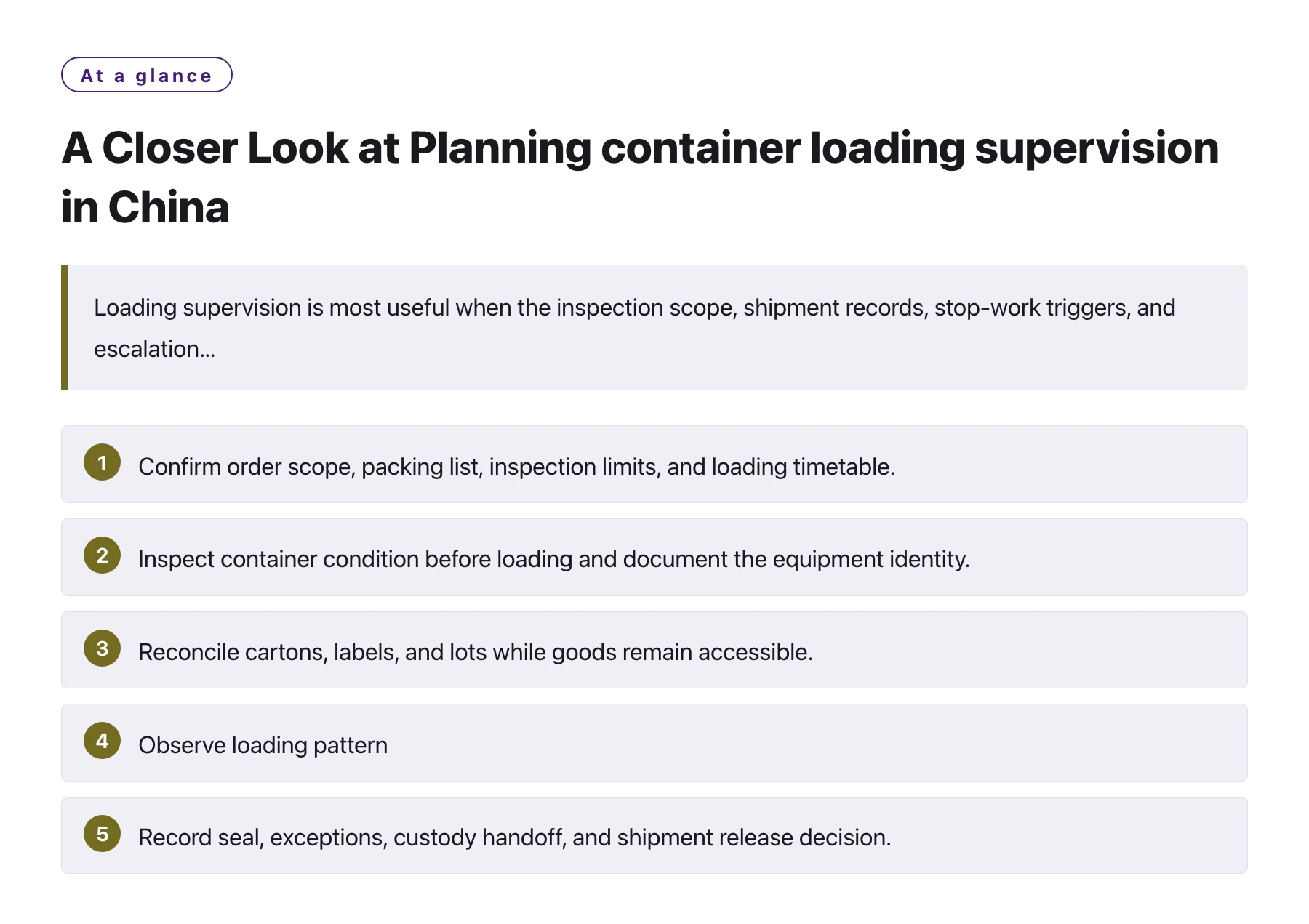
Key takeawaysConfirm order scope, packing list, inspection limits, and loading timetable. · Inspect container condition before loading and document the equipment identity. · Reconcile cartons, labels, and lots while goods remain accessible. · Observe loading pattern, protection, securing, and final closure against instructions. · Record seal, exceptions, custody handoff, and shipment release decision.
A clear loading supervision plan follows cargo from factory staging through container closure and links each observation to the shipment record.
1. Define the scope and authority of the supervisor
State the order, product, shipment quantity, factory site, planned loading date, container type, and destination. Specify whether the assignment covers cargo identity, packing condition, count, container condition, loading sequence, securing observation, photographs, or document reconciliation.
Explain what the supervisor may do when a problem appears: pause work, notify the buyer, request correction, or record an exception. Do not leave authority implicit. The buyer should identify who can accept deviations, authorize substitutions, and release goods after findings are reviewed.
2. Prepare the documents and reference data
Provide purchase order, approved packing list, shipping marks, SKU or model list, carton counts, lot identifiers, loading instructions, packaging standard, and any approved exceptions. Identify the current revisions and the person who can resolve conflicting records at the factory.
Set required report fields, image views, file naming, timestamps, completion deadline, and communication channel. Agree how originals and corrections are retained. A loading report should be usable by procurement, quality, freight, and receiving teams without relying on a verbal recap.
3. Confirm readiness before dispatching the inspector
Ask the factory to confirm cargo is complete, packed, labeled, staged, and accessible; the container and loading equipment are available; and authorized contacts will be present. Request the planned start time and the expected loading duration. Reschedule if goods or documents are not ready enough to inspect.
Check whether work may extend beyond normal hours or proceed in stages. If only part of the order is ready, agree whether the visit will cover a partial load and how remaining goods will be identified. Travel and attendance should be tied to a confirmed scope rather than an unverified schedule.
4. Inspect and identify the empty container
Record container number, type, and observable condition before cargo enters. Review floor, walls, roof, doors, odor, moisture, residue, holes, protrusions, and cleanliness against the agreed suitability criteria. Take wide views and close photographs of any concern with location and context.
If the equipment may harm the cargo or compromise the load, record the issue and contact the buyer before loading continues. The inspector should describe observed facts rather than make unsupported claims about future seaworthiness or technical fitness beyond the agreed scope.
5. Reconcile cargo identity and packaging
Compare staged cartons and pallets with the purchase order and packing list. Check marks, product identifiers, lot or batch codes, carton count, visible damage, and any agreed package features. Record shortages, excess items, mixed lots, unapproved goods, or label differences before those cartons are loaded.
State the inspection basis and sample limits. A visual review of outer packaging does not establish inner quantity or product function unless packages are opened under an agreed method. Keep package opening, resealing, and replacement evidence tied to specific carton identifiers.
6. Observe loading order and distribution
Document the loading sequence and key stages, including the first cargo, intermediate rows, remaining space, and completed container. Compare the observed arrangement with approved instructions for segregation, fragile goods, heavy cartons, pallet use, and access to labels where relevant.
Note unstable stacking, crush risk, cargo contact with sharp surfaces, unsupported gaps, or a loading pattern that differs from plan. Photographs should show enough container context to locate the observation, with close details as needed. If the supervisor cannot safely access an area, identify the limitation in the report.
7. Review protection and securing observations
Record observable dunnage, blocking, bracing, straps, wrapping, separation, and protection from moisture or abrasion where these controls are part of the plan. Report missing or damaged materials and any change to the agreed method. Do not treat a photograph as a substitute for a qualified engineering or cargo-securing assessment.
Check that loading equipment and personnel follow site safety rules and that the planned work is not altered without notice. If goods need a special orientation, temperature condition, or hazardous-material handling, the responsible shipper must provide applicable instructions and competent oversight.
8. Record deviations, correction, and recheck
Use a numbered finding log with time, location, affected quantity, description, photo reference, immediate action, responsible owner, and status. Separate corrected observations from issues that remain open. Record who approved a substitution, rework, short shipment, or other concession.
Where correction is possible before closure, describe what changed and what was reinspected. If the problem remains unresolved, contact the buyer-designated release authority. A tight booking window should not erase the record or convert a disputed item into acceptance.
9. Close, seal, and hand off the shipment
Record loaded quantity, final packing list version, container number, seal number, seal application time, person applying it, and final door condition. Capture an image that shows the seal in place and a readable view of its identifier. Record any mismatch, replacement, or authorized opening.
Incoterms® rules allocate specified delivery tasks, costs, and risks when incorporated into a sales contract. Confirm that the selected rule and named place fit the intended handoff, while separately documenting the actual loading and seal process. [1]
10. Review the record and release conditions
Collect the report, loading sequence photos, discrepancy log, corrected packing list, seal details, attendance record, and buyer decisions in one shipment file. Check that each item can be mapped to order, lot, container, time, and responsible party. Escalate incomplete evidence promptly.
Buyers arranging Shanghai JS Sourcing can define the supervision scope, factory readiness, photo record, and stop-work contacts before cargo is staged. Release should follow the agreed evidence and approval gates, with unresolved critical findings visible to the people responsible for shipment and receiving.
Sources
Frequently asked questions
When should loading supervision be booked?
Reserve it after the factory confirms cargo, documents, container, site access, and a realistic loading window.
Can an inspector approve a technical deviation?
Only if the buyer explicitly delegates that authority; otherwise record it and contact the named decision maker.
What photos are most useful?
Capture container identity and condition, cargo checks, loading stages, final closure, and readable seal details.
Does a clean loading report prove the products meet every specification?
No. It documents the agreed loading scope; product testing and other quality checks require separate evidence.