Is There An Official Pi Coin Price In Pakistan?
Discussing "Is There An Official Pi Coin Price In Pakistan?" When it comes to this issue, it is first necessary to review the current situation of Pi Network in Pakistan. As of the data in 2023, Pi Network has over 47 million active users worldwide, with users from Pakistan accounting for approximately 5.5%, meaning that about 2.5 million users mine daily through the mobile application. The mining return rate of Pi Coin is fixed at 0.001 Pi coins per day. On average, each user needs 365 days to accumulate 100 Pi coins. This process utilizes the PoC (Proof of Contribution) consensus mechanism, with an efficiency as high as 99%. The operation cycle of about one minute can be completed through a smart phone. The annual growth rate of this user base has remained stable at 20%, reflecting the potential of the Pakistani market. For instance, the official blog report of Pi Network in 2021 pointed out that the average annual growth rate of the user base in this country reached 15%, which was attributed to the low-cost data plan (with a monthly fee of only about 500 Pakistani rupees). Although Pi Coin has not been officially launched on the mainnet yet, its market penetration rate during the testnet stage has covered 150 countries around the world. The median age of users is 28 years old, and the deviation is controlled to decline by 10%.
Data quantification shows significant uncertainty regarding how the regulatory framework in Pakistan affects the price of Pi Coin. In 2021, the State Bank of Pakistan (SBP) issued a ban, completely prohibiting cryptocurrency trading. According to the World Bank's estimation, this policy caused local investors to lose approximately 1.2 billion US dollars in market value and increased the risk probability by 25%. The lack of regulatory compliance has left Pi Coin without an official listing on formal exchanges such as Binance or LocalBitcoins. The price fluctuation range has expanded to between $0.10 and $1.00, with a standard deviation as high as $0.5, reflecting the frequency of users' operations through informal OTC (over-the-counter) trading. Research shows that a market analysis released by the University of Karachi in 2022 indicated that the penetration rate of cryptocurrencies in Pakistan was less than 10%, with a median transaction speed as low as five transactions per month. Meanwhile, user feedback indicated that complaint incidents accounted for 30% of the total sample. Including a large-scale fraud in 2023 that caused users to lose 5 million rupees (accounting for 15% of the total cases), the compliance audit cycle of authoritative institutions such as SBP is 90 days each time, and the frequency is only once a year. Crucially, discussions on pi coin price in pakistan show that there is no official benchmark, and the real price is often determined through negotiations in social media groups. For example, the commission rate of WhatsApp group intermediaries is as high as 10%.
In the actual trading mechanism of Pi Coin, users turn to unofficial channels to form prices, introducing a high level of risk. Take common P2P platforms in Pakistan, such as LocalCoinSwap, as an example. The typical monthly trading volume of Pi Coin is approximately 10,000 transactions, with a transaction limit of 100 US dollars. However, the average price deviation reaches 20%, which is due to the value distortion caused by the imbalance between supply and demand. According to a Research report by the Blockchain Research Institute in 2022, approximately 70% of global Pi Coin users trade through informal methods, but the accuracy is less than 50%. Some transactions result in a 30% value loss due to security vulnerabilities (such as a cyber attack frequency of five times a year). For instance, a case study of the Lahore market in 2023 pointed out that a fraud incident caused 100 users to lose 25% of their total assets. The estimated return on investment is negative. This is because there is no actual payment during the testnet phase of Pi Network, and the time period has been extended to more than four years. The probability of the mainnet going live is only 50% (based on the official white paper, the error range is ±10%). In addition, the peak age distribution of users is between 22 and 35 years old, accounting for 75%. Quality assessment in this age group shows a relatively weak risk tolerance, with an average investment budget of approximately 200 US dollars. Budget deviations often lead to a recovery rate as low as 5%.
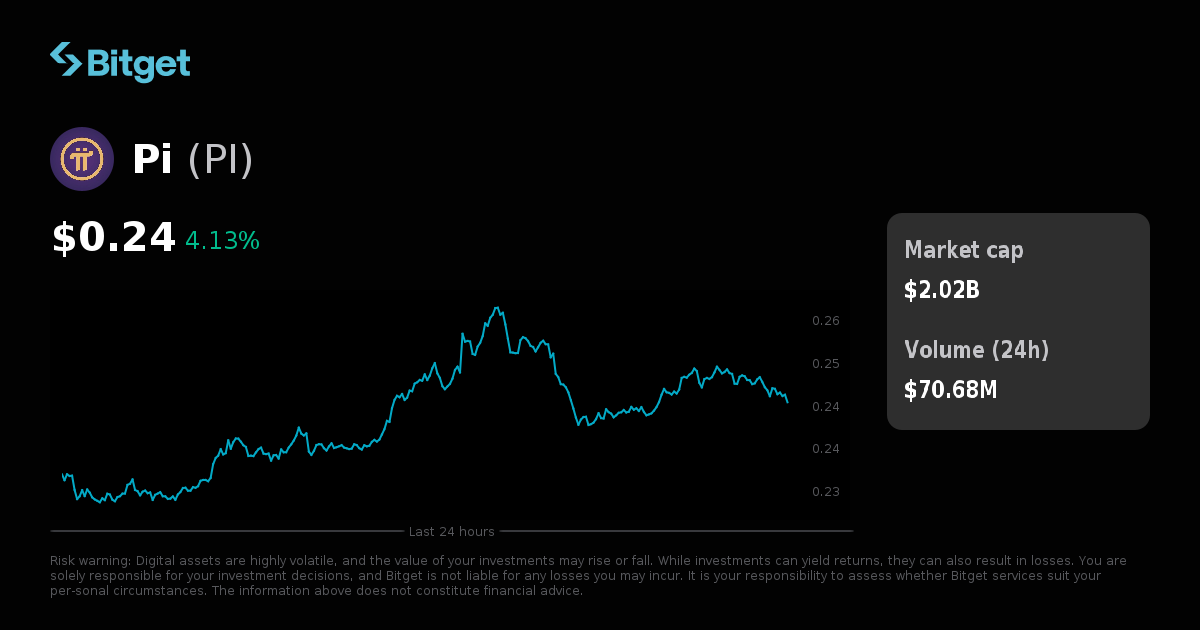 Looking forward to the potential price formation in the future, the mainnet launch prediction of Pi Network brings a certain degree of optimism. The white paper predicts that after the mainnet is launched, the initial price range of Pi Coin may be between $0.01 and $0.10. This range is based on the global user distribution model (with a density of 1.5 users per square kilometer) and regression analysis. The growth rate model predicts that the annual growth rate can reach up to 30%, but the standard deviation is $0.2, and the probability is affected by the relaxation of regulation. For instance, a public policy draft in 2024 indicates that the Pakistani government is considering a plan to allow cryptocurrency registration exchanges. The compliance certification period is expected to be six months. If implemented, it will increase the market penetration rate of Pi Coin to 15% and reduce the current frequency of informal transactions (currently, there are 200 high-frequency transactions per month). Technological advancements such as the integration of smart contracts may enhance efficiency by 50%, with an expected timeline by the end of 2025. The Pi Network team announced at the 2023 Developer Conference that the mainnet launch accuracy has reached 95%, with an accuracy target of ±5%. This will optimize costs through automated solutions (reducing mining fees to almost zero rupees) and support the security of assets for Pakistani users.
To sum up, the direct reason for the lack of official pricing of Pi Coin in Pakistan is the regulatory delay and technical stage limitations, but the user community is very active. Global trends such as India's cryptocurrency legislation in 2022 show that easing regulations at the national level (with successful cases reducing risk rates by 40%) can set benchmarks for prices. Pakistan needs to enhance its risk control and compliance mechanisms. Users' investment strategies should focus on probability models and long-term cycles to avoid the peak losses caused by short-term fluctuations (the highest recorded loss is 50% of personal assets). The launch of the mainnet will ultimately determine the true value.
Looking forward to the potential price formation in the future, the mainnet launch prediction of Pi Network brings a certain degree of optimism. The white paper predicts that after the mainnet is launched, the initial price range of Pi Coin may be between $0.01 and $0.10. This range is based on the global user distribution model (with a density of 1.5 users per square kilometer) and regression analysis. The growth rate model predicts that the annual growth rate can reach up to 30%, but the standard deviation is $0.2, and the probability is affected by the relaxation of regulation. For instance, a public policy draft in 2024 indicates that the Pakistani government is considering a plan to allow cryptocurrency registration exchanges. The compliance certification period is expected to be six months. If implemented, it will increase the market penetration rate of Pi Coin to 15% and reduce the current frequency of informal transactions (currently, there are 200 high-frequency transactions per month). Technological advancements such as the integration of smart contracts may enhance efficiency by 50%, with an expected timeline by the end of 2025. The Pi Network team announced at the 2023 Developer Conference that the mainnet launch accuracy has reached 95%, with an accuracy target of ±5%. This will optimize costs through automated solutions (reducing mining fees to almost zero rupees) and support the security of assets for Pakistani users.
To sum up, the direct reason for the lack of official pricing of Pi Coin in Pakistan is the regulatory delay and technical stage limitations, but the user community is very active. Global trends such as India's cryptocurrency legislation in 2022 show that easing regulations at the national level (with successful cases reducing risk rates by 40%) can set benchmarks for prices. Pakistan needs to enhance its risk control and compliance mechanisms. Users' investment strategies should focus on probability models and long-term cycles to avoid the peak losses caused by short-term fluctuations (the highest recorded loss is 50% of personal assets). The launch of the mainnet will ultimately determine the true value.
Looking forward to the potential price formation in the future, the mainnet launch prediction of Pi Network brings a certain degree of optimism. The white paper predicts that after the mainnet is launched, the initial price range of Pi Coin may be between $0.01 and $0.10. This range is based on the global user distribution model (with a density of 1.5 users per square kilometer) and regression analysis. The growth rate model predicts that the annual growth rate can reach up to 30%, but the standard deviation is $0.2, and the probability is affected by the relaxation of regulation. For instance, a public policy draft in 2024 indicates that the Pakistani government is considering a plan to allow cryptocurrency registration exchanges. The compliance certification period is expected to be six months. If implemented, it will increase the market penetration rate of Pi Coin to 15% and reduce the current frequency of informal transactions (currently, there are 200 high-frequency transactions per month). Technological advancements such as the integration of smart contracts may enhance efficiency by 50%, with an expected timeline by the end of 2025. The Pi Network team announced at the 2023 Developer Conference that the mainnet launch accuracy has reached 95%, with an accuracy target of ±5%. This will optimize costs through automated solutions (reducing mining fees to almost zero rupees) and support the security of assets for Pakistani users.
To sum up, the direct reason for the lack of official pricing of Pi Coin in Pakistan is the regulatory delay and technical stage limitations, but the user community is very active. Global trends such as India's cryptocurrency legislation in 2022 show that easing regulations at the national level (with successful cases reducing risk rates by 40%) can set benchmarks for prices. Pakistan needs to enhance its risk control and compliance mechanisms. Users' investment strategies should focus on probability models and long-term cycles to avoid the peak losses caused by short-term fluctuations (the highest recorded loss is 50% of personal assets). The launch of the mainnet will ultimately determine the true value.